CARREGANDO

amanda   |

   December 15, 2023

The Digital Age for Retail

Como a Tecnologia Está Transformando as Compras Físicas

In today’s retail landscape, marked by fierce competition and growing challenges, technology is emerging as a transformative force capable of significantly enhancing the in-store shopping experience. This is the central focus of the fifth edition of Salesforce’s “Connected Shoppers” Report, which offers valuable insights based on surveys of 2,400 shoppers and 1,125 retail industry professionals. 

The surveys, conducted between May 18 and June 21, 2023, cover a wide range of respondents from North America, Europe, South America, and the Asia-Pacific region, all of whom are affiliated with various companies, as detailed on page 44 of the report.

Executive Summary

This report highlights an inescapable reality for retailers: the need to seamlessly integrate digital and in-store shopping experiences. This integration is not merely a convenience, but a critical requirement for effectively connecting with consumers. 

The survey highlights an alarming statistic:

74% of shoppers say that just three bad experiences are enough to make them stop using a brand.

Retailers, aware of these challenges, are seeking new ways to compete and stand out. They see significant opportunities in customer service, e-commerce, and personalization. However, to capitalize on these opportunities, a greater reliance on data, insights, and technology is essential. Those who fail to keep pace with this trend risk falling behind.

The humanization of digital experiences

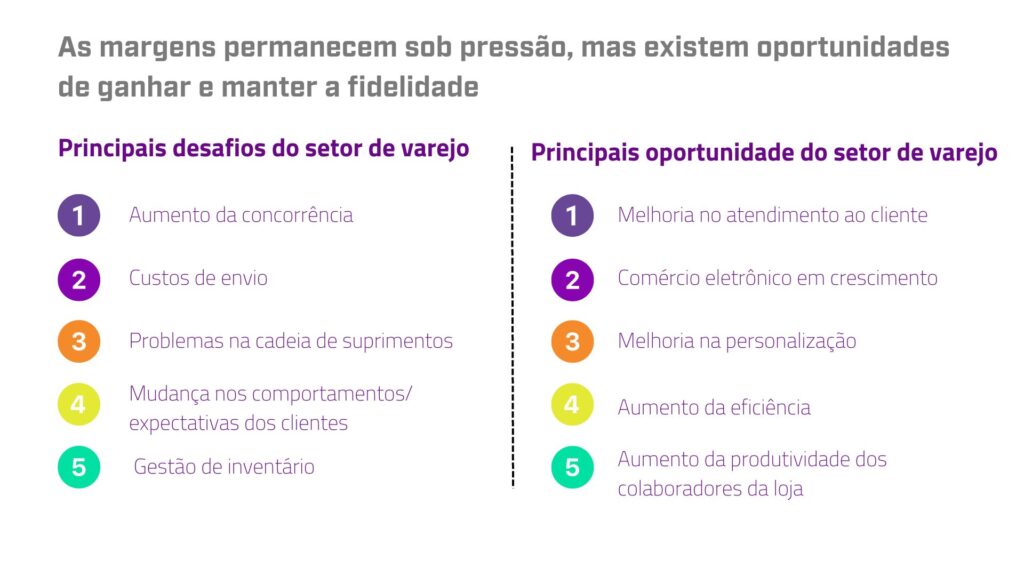
Faced with an increasingly challenging business environment, characterized by fierce competition, high costs, and supply chain issues, retailers are seeking ways to overcome these obstacles. The key to this seems to lie in humanizing digital experiences, identifying opportunities to increase loyalty and capture a larger share of consumers’ spending. This effort requires a deep understanding of changes in shoppers’ behaviors and expectations.

The main challenges facing the industry include increased competition, high shipping costs, supply chain issues, changes in customer behavior and expectations, and inventory management. At the same time, the key opportunities identified revolve around improving customer service, the growth of e-commerce, enhanced personalization, and increased efficiency and productivity among store employees.

Technology Enhances In-Store Shopping

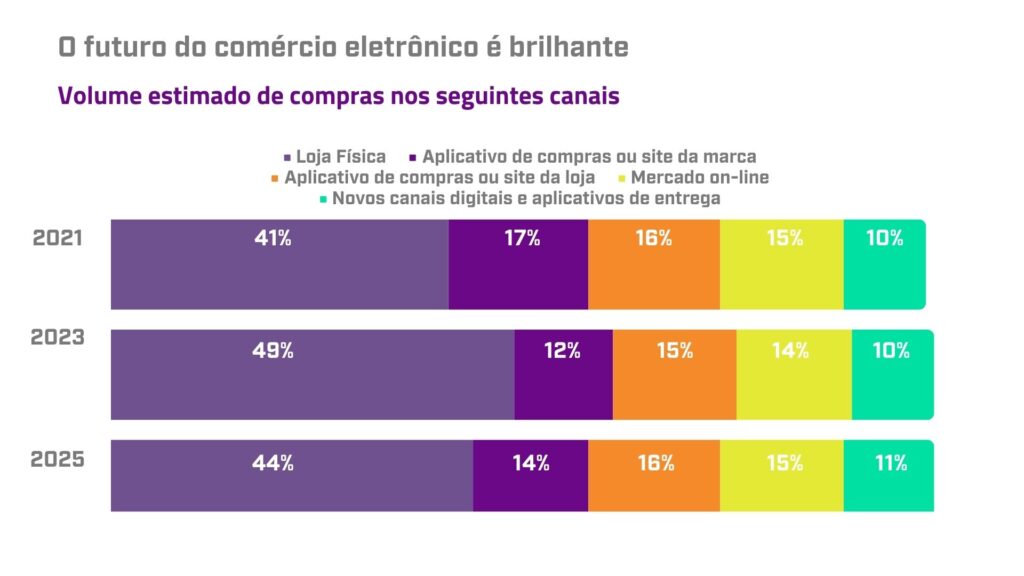
In the dynamic world of retail, the interaction between physical and digital channels is becoming increasingly complex and essential. With the rise of digital retail—a trend that has been particularly accelerated during the pandemic—we have observed a significant shift in consumer shopping habits. In 2023, data indicates that people are splitting their purchases almost equally between physical and online stores, a trend that reflects the growing convergence of physical and digital retail environments.

Interestingly, while in 2023 shoppers reported that 49% of transactions took place in physical stores, the expectation is that this figure will drop to 44% within two years. This data not only underscores the ongoing evolution of consumer behavior but also points to a gradual shift in purchasing preferences toward digital channels.

But where are these shoppers heading? The answer goes beyond traditional e-commerce websites, apps, and online marketplaces. We are seeing a growing trend toward new digital channels, such as social media and voice assistants, which are becoming influential platforms for inspiration and shopping. This diversification of channels reflects a search for more integrated and convenient shopping experiences, where technology plays a key role.

In 2023, shoppers say they made 49% of their purchases in physical stores.

Interestingly, while in 2023 shoppers reported that 49% of transactions took place in physical stores, the expectation is that this figure will drop to 44% within two years. This data not only underscores the ongoing evolution of consumer behavior but also points to a gradual shift in purchasing preferences toward digital channels.

But where are these shoppers heading? The answer goes beyond traditional e-commerce websites, apps, and online marketplaces. We are seeing a growing trend toward new digital channels, such as social media and voice assistants, which are becoming influential platforms for inspiration and shopping. This diversification of channels reflects a search for more integrated and convenient shopping experiences, where technology plays a key role.

Shoppers Expect Brands to Meet Them Where They Are

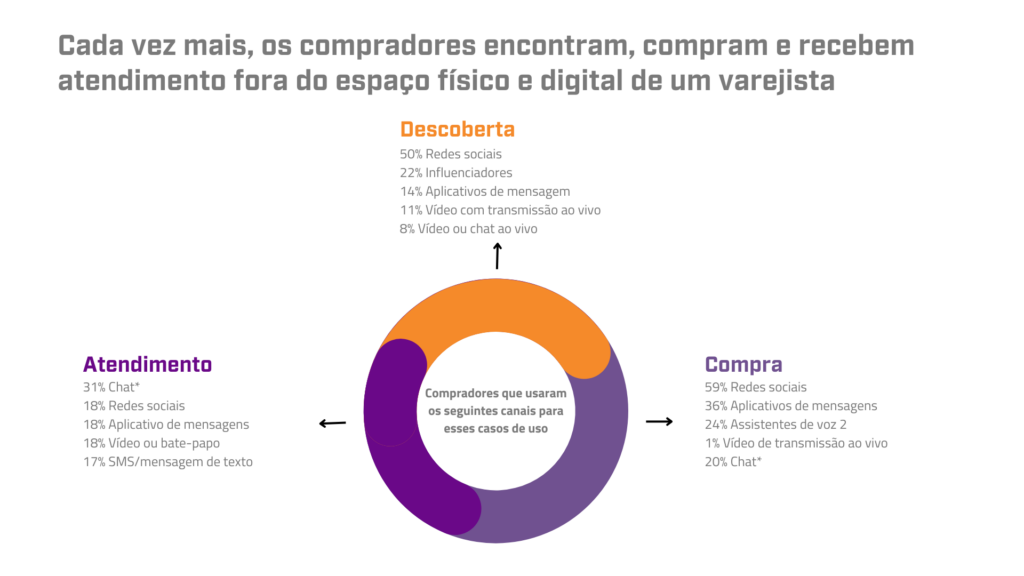
The digital era in retail is witnessing a remarkable transformation in the way shoppers interact with brands. Today, more than ever, consumers expect retailers to meet them where they are already engaged—on social media, messaging apps, and live-streaming services. This expectation is giving rise to a growing trend known as “edge shopping,” a phenomenon where shoppers begin—and increasingly complete—their shopping journeys outside of a retailer’s traditional and digital channels.

This shopping journey often begins on social media, which has become a crucial starting point for discovering new products. Currently, 50% of consumers report finding new products through social media. This trend is not limited to discovery alone but extends to the purchase itself. In a significant shift in shopping behavior, we’ve observed that the share of shoppers who actually make purchases on social media has nearly quadrupled in just two years. In 2023, 59% of shoppers say they’ve completed a transaction on social media—a striking jump from 15% in 2021.

59% of shoppers say they have completed a transaction on social media. In 2021, that figure was 15%.

In addition to social media, messaging apps such as WeChat and Facebook Messenger are also becoming important channels for purchasing transactions. A surprising 227% increase was observed in the proportion of shoppers using these apps for purchases, jumping from 11% in 2021 to 36% in 2023. This growth reflects a significant shift in consumer preferences and the way they interact with brands.

These figures point to a clear shift in consumer behavior, with shoppers seeking convenience, immediacy, and a more integrated shopping experience. Brands that can adapt to these changes—by meeting consumers where they are and offering seamless, personalized shopping experiences—are well-positioned to thrive in this new era of digital retail.

Digital Tools Enhance In-Store Experiences

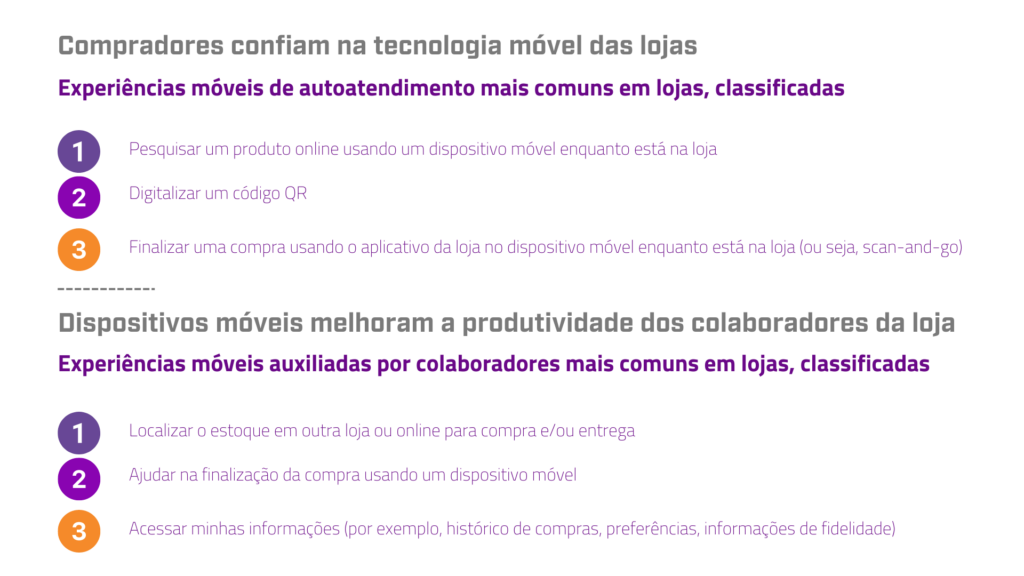
The integration of technology into brick-and-mortar retail is redefining the in-store shopping experience, with digital tools playing an increasingly crucial role. Currently, 60% of shoppers report using their smartphones inside physical stores, a practice that is significantly transforming the way they interact with products and services. This trend highlights the growing role of mobile technology in the shopping journey, serving as a bridge between the digital and physical worlds.

Smartphones have become essential tools for consumers in brick-and-mortar stores, used for a variety of functions that enhance the shopping experience. Shoppers use their devices to search for and compare prices, scan QR codes, and even complete purchases through scan-and-go systems. This multifaceted use of smartphones not only provides convenience but also offers a more informed and self-directed shopping experience.

In addition to consumers’ independent use of smartphones, interaction with store associates who use mobile devices is also a crucial aspect. These devices allow associates to quickly check inventory availability, complete transactions, or answer customer questions efficiently. This integration of mobile devices into customer service significantly improves efficiency and customer satisfaction by providing quick and accurate responses to customer needs.

This fusion of digital tools with the in-store shopping experience is a clear example of how technology is enhancing retail. It not only facilitates a smoother, more integrated shopping journey, but also paves the way for new opportunities for interaction and engagement between retailers and their customers. As these technologies continue to evolve, we can expect to see even more innovations that will transform the in-store shopping experience.

An analysis of Amazon’s traffic in Brazil, using data from Similarweb, offers a fascinating insight into how consumers interact with the e-commerce giant. The predominance of direct visits, which account for 32% of total traffic, indicates strong brand loyalty and recognition. This suggests that a large portion of consumers go directly to Amazon’s website, possibly due to the trust they have in the brand and the quality of the services offered.

Organic search, which accounts for 23.1% of traffic, reflects the effectiveness of Amazon’s SEO strategies. Although this figure is below the national average, it still represents a significant share, indicating that many consumers find Amazon through search engines when looking for specific products. This highlights the importance of well-executed SEO and the need for relevant, well-optimized content.

On the other hand, paid search, which accounts for 31.36% of traffic, highlights Amazon’s investment in online advertising. This high figure suggests an aggressive digital marketing strategy aimed at capturing a broad base of potential customers through paid ads.

As for the competition, Mercado Livre stands out as Amazon’s main rival in Brazil, with an impressive 308 million visits. Mercado Livre not only offers a wide range of products but has also added financial and delivery services, enhancing its appeal and convenience for consumers.

Shopee, with its focus on low-cost products—mostly imported—has attracted a large number of consumers, reaching 137 million visits. This approach has been particularly appealing to consumers looking for deals and competitive prices.

Magazine Luiza, with 116 million visits, stands out for its omnichannel strategy, which integrates its brick-and-mortar stores with its e-commerce platform. This approach offers consumers a more integrated and flexible shopping experience, allowing them to choose between shopping online or in-store.

Featured ⭐ : Buyers See Opportunities in Generative AI

Generative artificial intelligence (AI) is emerging as a disruptive force in retail, redefining the way consumers interact with brands and explore products. This type of AI, which has the ability to create new content from existing data, is opening up new avenues for the shopping experience, making it more intuitive, personalized, and inspiring.

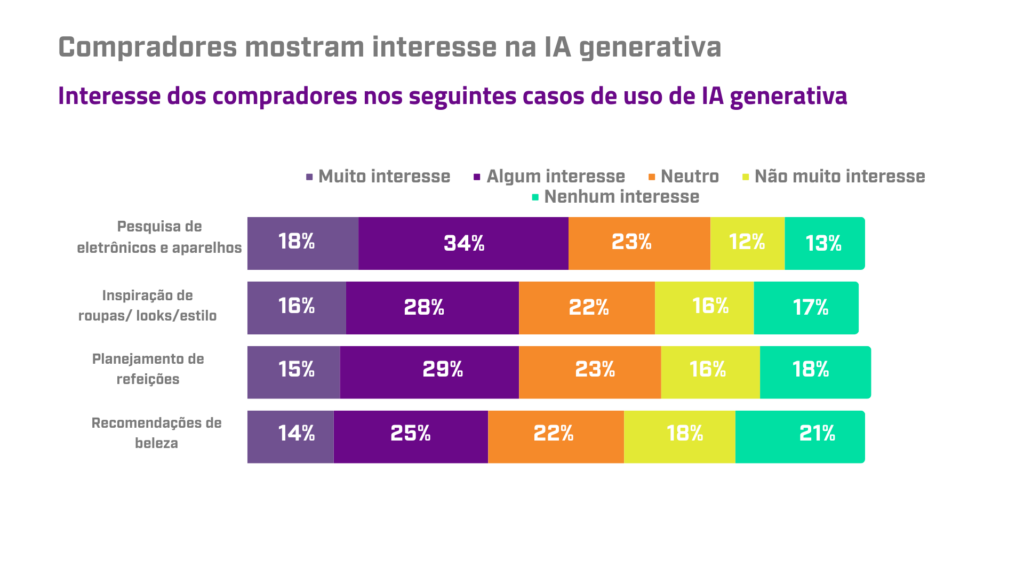
Shoppers are increasingly interested in generative AI, primarily because of how easily it allows them to search for items, receive personalized recommendations, and find inspiration across various product categories. This technology is becoming a crucial element in the shopping journey, helping consumers discover products that meet their needs and preferences in an efficient and innovative way.

A notable finding reveals that 17% of shoppers have already used generative AI to find inspiration before making a purchase. This figure points to a growing trend in the adoption of this technology within the purchasing decision-making process. Generative AI not only helps consumers explore options and ideas they might not have considered before, but also offers a richer and more engaging shopping experience.

The adoption of generative AI in retail represents a significant shift in the way consumers interact with brands and products. It not only simplifies product search and selection but also enriches the user experience with personalized recommendations and inspiring content. As this technology continues to evolve, we are likely to see an increase in its use, further transforming the shopping experience and offering new opportunities for retailers to connect with their customers.

Featured ⭐: Retailers Believe Generative AI Can Optimize and Personalize Customer Experiencespurchase

In the retail sector, generative artificial intelligence (AI) is being viewed not only as an innovation but as an essential tool for creating simpler, more personalized interactions with consumers. Retailers are recognizing the potential of this technology to transform the shopping experience, both online and in physical stores.

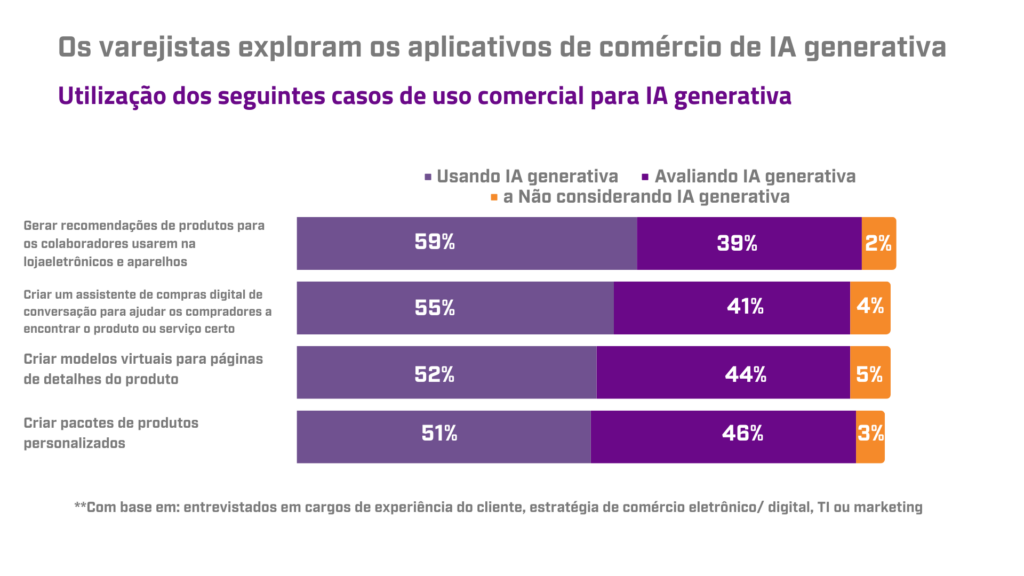
Generative AI is being used to curate offerings and enhance digital experiences, providing a service that is better tailored to consumers’ individual needs and preferences. An impressive 92% of retailers report that they are investing more than ever in AI to improve shopping experiences. This massive investment reflects the belief in AI’s potential to revolutionize the industry.

Although there are still questions about whether retailers are implementing generative AI into their workflows or are still in the testing phase, the data is promising: 59% of retailers say they already use this technology to help store associates recommend products to shoppers. This indicates a practical application of generative AI, where employees are equipped with tools that improve the quality and accuracy of recommendations made to customers.

In addition, 55% of retailers are exploring or already using online platforms to create conversational digital assistants. These assistants help online shoppers find products more efficiently, offering a more interactive and personalized shopping experience. This approach not only improves the customer experience but also represents a significant step forward in how retailers interact with and meet the needs of consumers.

Generative AI is thus establishing itself as a powerful force in retail, with the potential to optimize and personalize shopping experiences in ways that were previously unimaginable. As this technology continues to evolve and become more deeply integrated into retail processes, we can expect to see even more significant transformations in the way we buy and sell.

An analysis of Amazon’s traffic in Brazil, using data from Similarweb, offers a fascinating insight into how consumers interact with the e-commerce giant. The predominance of direct visits, which account for 32% of total traffic, indicates strong brand loyalty and recognition. This suggests that a large portion of consumers go directly to Amazon’s website, possibly due to the trust they have in the brand and the quality of the services offered.

Organic search, which accounts for 23.1% of traffic, reflects the effectiveness of Amazon’s SEO strategies. Although this figure is below the national average, it still represents a significant share, indicating that many consumers find Amazon through search engines when looking for specific products. This highlights the importance of well-executed SEO and the need for relevant, well-optimized content.

On the other hand, paid search, which accounts for 31.36% of traffic, highlights Amazon’s investment in online advertising. This high figure suggests an aggressive digital marketing strategy aimed at capturing a broad base of potential customers through paid ads.

As for the competition, Mercado Livre stands out as Amazon’s main rival in Brazil, with an impressive 308 million visits. Mercado Livre not only offers a wide range of products but has also added financial and delivery services, enhancing its appeal and convenience for consumers.

Shopee, with its focus on low-cost products—mostly imported—has attracted a large number of consumers, reaching 137 million visits. This approach has been particularly appealing to consumers looking for deals and competitive prices.

Magazine Luiza, with 116 million visits, stands out for its omnichannel strategy, which integrates its brick-and-mortar stores with its e-commerce platform. This approach offers consumers a more integrated and flexible shopping experience, allowing them to choose between shopping online or in-store.

Conclusion

As we navigate this new era of retail, marked by the growing integration of technology into the shopping experience, it is clear that we are witnessing a revolution in the industry. The adoption of digital tools, the rise of generative AI, and the shift toward edge computing are just a few of the trends that are reshaping the way consumers interact with brands and make purchases.

In this ever-changing landscape, UM_digital emerges as a vital strategic partner for companies seeking to successfully navigate this new world of retail. With its expertise in combining technology and creativity, UM_digital is perfectly positioned to help brands tackle the challenges of digital marketing and commerce. Using its proprietary PPG (Planning, Presence, and Growth) methodology, UM_digital can develop scalable solutions that align perfectly with each client’s needs and goals.

If you'd like to learn more , please contact us here.

Compartilhar

Quer ser o próximo case de sucesso?

Solicite um orçamento agora mesmo.